

Adventures in Being Carried.
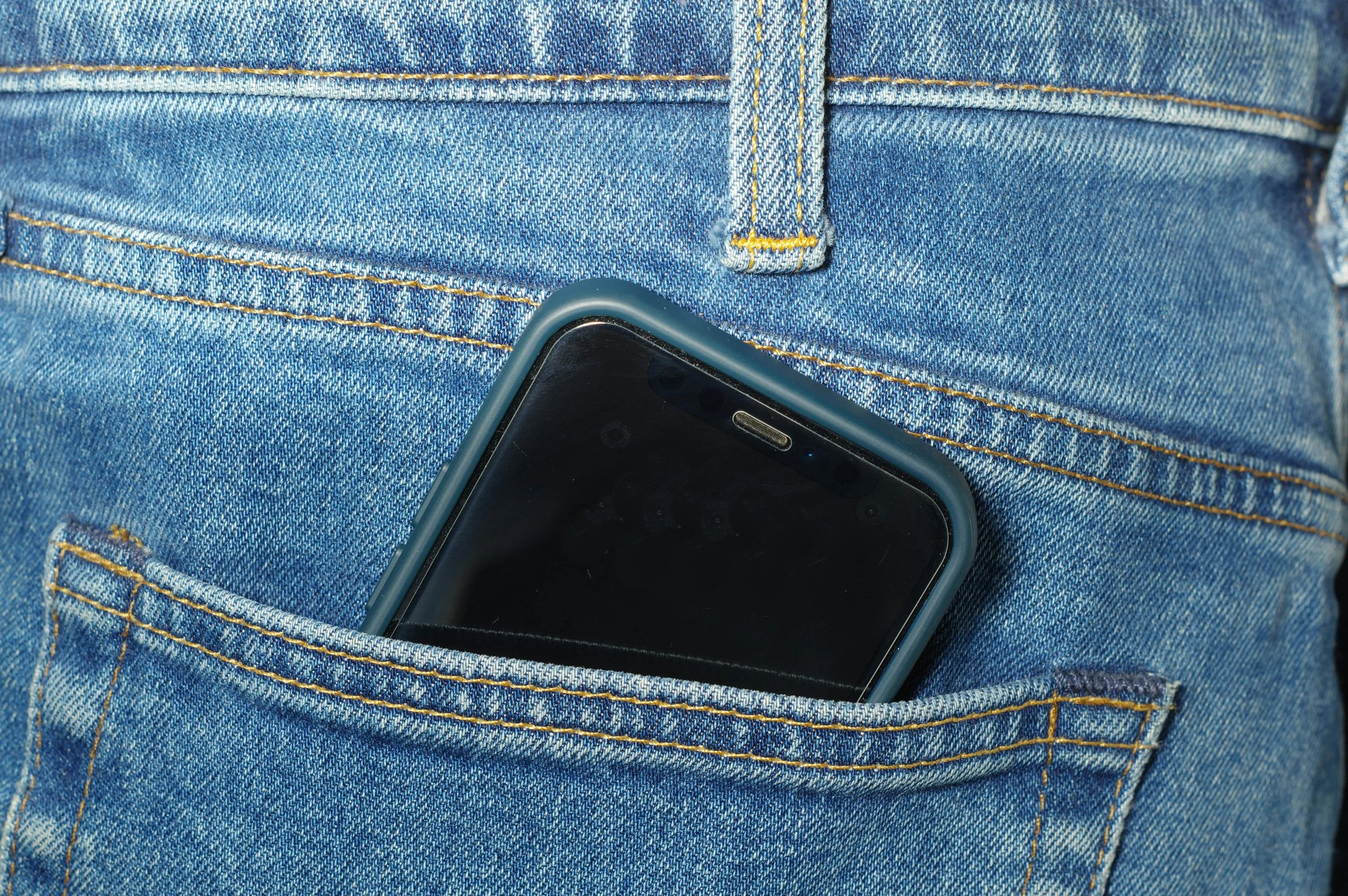
There is a particular humiliation in being able to put your phone into your back pocket and not being able to get it out.
That was me, in the first week after my double mastectomy. Somehow I had tucked it in. Getting it out meant reaching an arm behind me, and my arms were not taking requests. So, I asked my friend Link to fish my phone out of my pocket. And I cried. Not from pain. From the asking.
It wasn’t the phone that made it hard. You see, I embody hospitality. I am, by training and temperament, a value-add kind of person. My reflex in any room is to scan for what someone needs and get it to them before they ask. I’m good at it, and I’m proud of it. And this fall it was useless, because the person who needed something was me.
That first week was a long list of small surrenders. The half & half on a fridge shelf I couldn’t reach. My laptop and planner, which I couldn’t carry out to the porch. Help with my surgical drains. My first two showers after surgery, with someone in the shower assisting me, holding my drains so I could bathe. There is no dignified way to describe that one, and I’ve stopped looking for one.
Then there was the afternoon that Link carried out a stack of boxes, broke every one of them down, and hauled them to the recycling shed. They were boxes I’d meant to save for reuse. I asked him to bring them back. I did not have the heart to ask him to rebuild them. Even while receiving, I was rationing how much I would let myself take.
And here is what I didn’t have to ask for: someone to stay and care for me. Three sets of people offered before I even thought to ask. I only noticed that while writing this, and it stopped me.
It turns out my discomfort is well documented, and mostly mistaken. Psychologists Xuan Zhao and Nicholas Epley studied more than two thousand adults across imagined scenarios, recalled experiences, and live requests. People who needed help consistently underestimated how willing others were to give it and how good the helping would make them feel. They also overestimated how much of an imposition they were (Zhao & Epley, 2022, Psychological Science). In one experiment, people in a public park were asked to find someone to take their photo. In 47 of 50 cases, the first person they approached said yes.
The researchers suggest that we get it wrong because we correlate help with compliance: someone giving in to our request. We miss how much people actually want to help. Asking doesn’t only take something from the other person. It also gives them a chance.
I can’t speak for Link, or for the two angels who held my drains in place. What I can say is that the version of me who refused to ask would have been protecting people from something that, the research suggests, most don’t experience as a burden.
This isn’t only a personal quirk, so let me zoom out. Ute Franzen-Waschke, who co-facilitated our community huddle exploring regenerative capitalism/ecosystems, shared a three-tier way of looking at any system:
· Degenerative: using up people and resources faster than they can recover.
· Sustainable: keeping things going without making them worse.
· Regenerative: actively restoring and renewing.
We apply that lens to forests, organizations and economies. We rarely apply it to ourselves. But a person who only gives is running a degenerative system, with the extraction aimed inward. More than one person has reflected this back to me: that I give so much away, I forget to value what I bring to the table.
Regeneration requires circulation. Capital that only flows out isn’t generosity. It’s depletion with good manners. Let’s be clear: depletion with good manners still leaks. However gracefully I hid it, the overextended version of me was the one walking into every room I led.
Ute and I once wrote about the stadium wave: one fan stands, and the motion travels across the whole bleacher. It takes one person to start. Sigal Barsade tested that idea in a lab. She placed a trained actor in small work groups and had the actor carry a particular mood. The mood spread, and when it was positive, groups cooperated more, clashed less, and rated their own performance higher (Barsade, 2002).
In September, I wrote about small “hellos” that ripple outward from a farmers’ market stall. In October, I wrote about the space between noticing and saying. This is the same gap, turned around. For many of us, the smallest true thing we haven’t said is “I need help.” I’ve come to believe that when one person says it out loud, it gets a little easier for the next person to say it, too.
Recovery is not for the impatient, and neither is receiving. I am not good at it yet. I’m practicing the way we practice anything worth building: at the low-stakes site, again and again. Half & half. A smartphone. A box.
So here is the question I’m sitting with, and offering to you: What are you carrying right now that someone near you would be glad to take?
Is Coaching for you? Are you ready for it? Sign up HERE for a 15-minute Complimentary Coaching Consult to find out.