

SPARK Empathy.
The Movie You're Starring in Isn't the Only One Playing
Think of someone in your life who makes your jaw clench before you've even said hello. A family member. A neighbor. Someone whose name in your notifications is enough to change your breathing. You haven't seen them yet. You haven't exchanged a word. And already something in you has decided how this is going to go.
I notice it in my body before I notice it in my mind. A clenched jaw. Clenched hands. Clenched butt. Yes, that too. Or sometimes the opposite: a performance of openness that's really just armor with better posture.
Either way, the verdict is already in. And the trial hasn't yet begun.
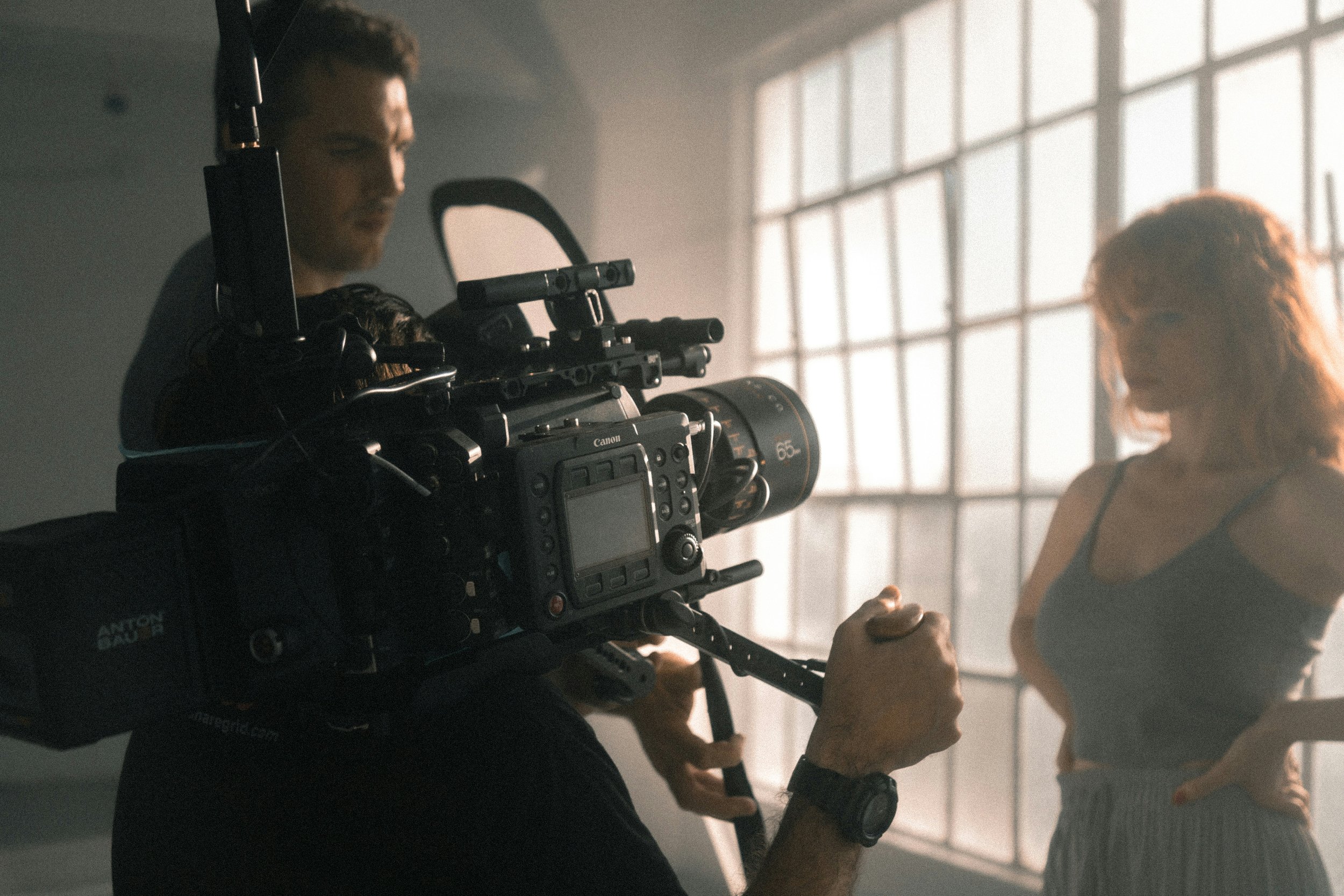
Here's what makes that verdict feel so airtight: we don't experience it as a verdict. We experience it as reality. Judith E. Glaser, creator of Conversational Intelligence® (C-IQ), called this Blind Spot #1; the assumption that others see what we see, feel what we feel, and think what we think. We are the director, the cinematographer, and the star of our own movie. And we assume, without realizing we're assuming, that everyone else is in the audience - watching the same film.
They're not. They're starring in their own.
This is exactly where empathy begins, and exactly where most of us stop.
Empathy isn't sympathy. It isn't agreement. It isn't losing yourself in someone else's pain or pretending their reality is yours. Think of those large standing binoculars bolted to the observation deck of the Empire State Building; the ones that have been there since 1932. When you step up to them, you don't get to choose your starting point. The lens is already pointed somewhere. Wherever the last person left it. Their angle. Their particular slice of skyline. What they chose to look at, what they wanted to see, what caught their attention from where they stood.
Empathy is stepping up to that lens, and looking through it before you redirect it. Genuinely trying to see what someone else was seeing. To feel the weight of what they carry. To understand why the world looks the way it does from inside their particular life.
It is harder than it sounds. Here's why.
The script they're working from has been in production for a long time. Neuroscience tells us that memory isn't a fixed recording, it's a living reconstruction. Research on memory reconsolidation shows that when we recall a memory, it can enter a malleable state, open to subtle revision before being stored again. The Brain & Behavior Research Foundation describes it plainly: each retrieval can alter the memory to reflect new information or the context in which it's being recalled.
Which means the certainty we feel about who someone is, what they meant, and why they did what they did is, in part, a story we've been quietly editing for years. We are, all of us, unreliable narrators of our own histories — and of each other's.
Add to that what I call your personal terroir: Your family. Your ethnicity and geographic location. The things that were said and unsaid at your dinner table. The experiences that taught you who was safe and who wasn't, what was normal and what was strange, whose reality counted and whose was suspect. It's your lived history; your bias. And it isn't a character flaw. The question isn't whether you have it. It's whether you've investigated it.
Even when we know all of this; even when we've read the neuroscience and done the self-reflection and committed to showing up differently, the body still tenses. The verdict still arrives before the person does.
Because here is the thing we resist acknowledging: that person is not wrong to believe what they believe; not from inside their movie. Their terroir is as real to them as yours is to you. What they wave, drive, or tend isn't random. It's the visible evidence of an interior world that is, to them, simply reality.
That is not a small thing to hold. And it is not a small thing to ask.
But I have lived what becomes possible when you do.
In late 1989, I found myself in Yugoslavia; a country already fracturing beneath the surface. Its ethnic tensions accelerating toward wars that would erupt within two years. My dear friend (a Belgrade native who had lived with my family and was like a brother to me) and I were traveling a rural road when our car rear-ended a tractor. In any ordinary circumstance, anywhere in the world, the driver of that tractor would have had every right to be furious. We had just hit his vehicle, his livelihood, possibly his only means of working his land. Set aside the political climate entirely and this was already a situation primed for anger.
And yet, the farmer invited us into his home. His wife fed us. And then he brought us to a bus to take us back to Belgrade. There was something that felt, across every language barrier and historical divide, like genuine human recognition.
I didn't understand what was going on in that room. Not fully. Not the language, not the history, not the weight of what it meant for these particular people to open their door to strangers in that particular moment in that particular country. What I understood was this: something real was being extended. And the only thing asked of me was to receive it.
That's it. That's the whole practice.
Not agreement. Not fluency. Not the dissolving of everything that divides us. Just — presence. Stepping up to someone else's binoculars long enough to see what they see. Even when it's hard. Even when the jaw is still clenched.
"Out beyond ideas of wrongdoing and rightdoing, there is a field. I'll meet you there." — Rumi
That field exists. I've been in it. It doesn't require you to abandon your values or surrender your spine. It just requires you to loosen your grip on the verdict long enough to see who's actually standing across from you.
The question I'm sitting with — and leaving with you — is this: whose movie have you stopped trying to understand? And what would it cost you to stay in the room a little longer?
Is Coaching for you? Are you ready for it? Sign up HERE for a 15-minute Complimentary Coaching Consult to find out.