

SPARK: Empathy into Practice
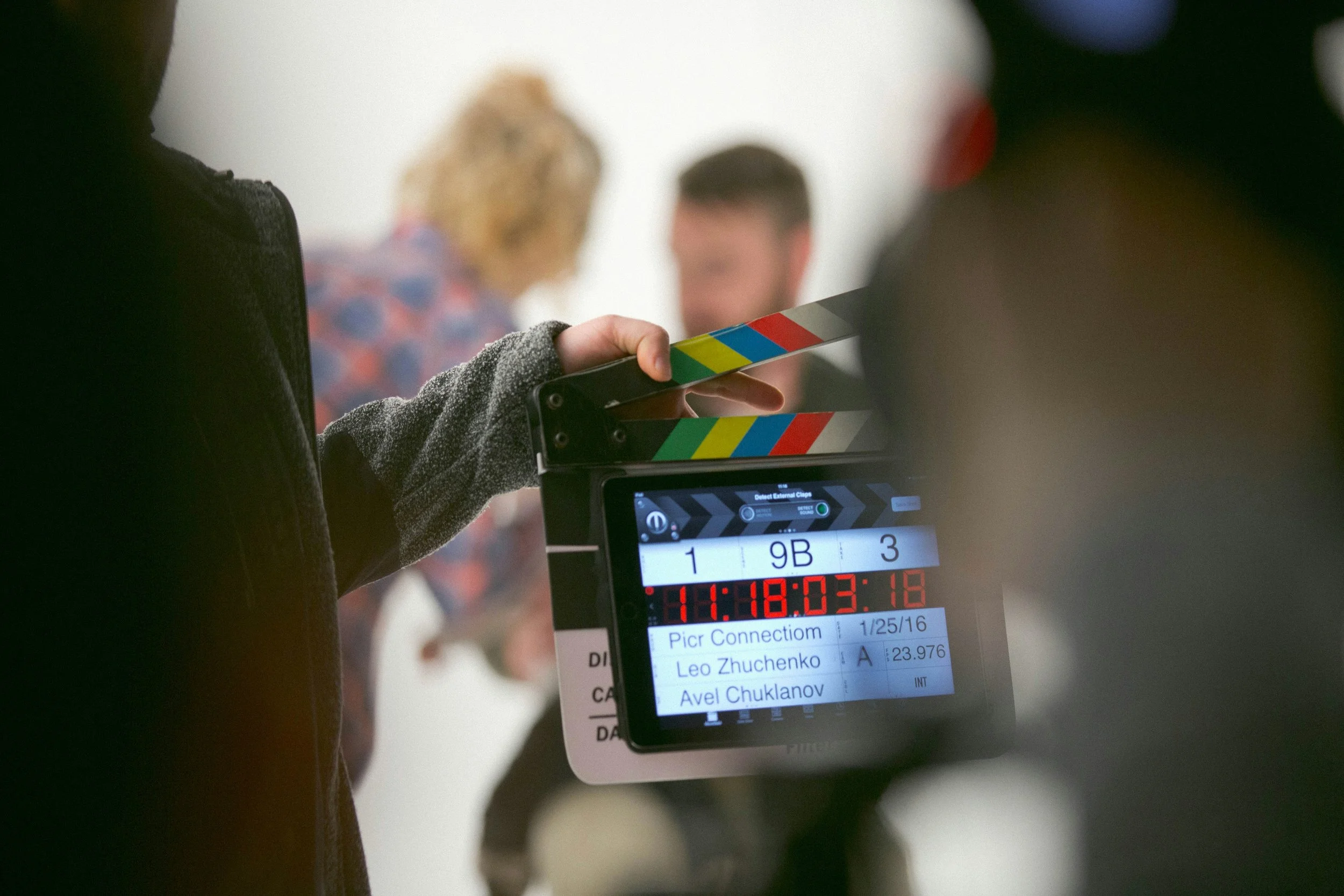
The Movie You're Starring In
Five-forty-seven a.m. Scrolling on the smartphone before your feet hit the floor. Coffee poured and half-forgotten on the counter. A text you're composing while someone is talking to you. The barista says something and you half-hear it. A coworker starts to tell you about their weekend and you're already nodding toward the next thing on your calendar.
None of that makes you a bad person. It makes you the protagonist of a very fast-moving film; one where you're also the writer, director, and only character whose interior life you have full access to. Everyone else on screen this morning: the barista, the coworker, the kid trying to tell you about their day - is, from where you're sitting, a supporting player. Sometimes not even that. Sometimes just an extra.
The Camera Was Always on You
This isn't a character flaw. It's closer to a default setting. Research on what's called the spotlight effect has found that people consistently overestimate how much others notice and evaluate them.
In the study that put the phenomenon on the map, researchers sent college students into a room of strangers wearing an oversized T-shirt printed with Barry Manilow's face, chosen, scientifically, for maximum cringe. The wearers guessed that nearly half the room would clock the shirt and know exactly whose face they were sporting. The real number was closer to one in four. Everyone else in that room, it turned out, was busy starring in their own movie too, and barely had Manilow on their radar.
That's the mechanism, dressed up in a bad T-shirt: each of us is, quite literally, the only person whose thoughts we experience from the inside. Everyone else's inner world has to be inferred, imagined, reconstructed with effort. Our own is just there, running constantly, demanding attention.
So, the baseline is already tilted toward self. Empathy, actually registering that the person across from you has a full, complicated inner life of their own, is effortful even on a calm day. It's not the default. It's the correction.
Then Stress Narrows the Lens Further
Now add pressure. A deadline, a high stakes conversation waiting, a full inbox, a low-grade sense that you're behind. The brain treats all of that as a threat, even when nothing dangerous is actually happening, and it responds the way threat-detection systems have always responded: by narrowing focus and reallocating resources toward whatever seems most urgent to your own survival.
Here's the part that matters for empathy specifically: perspective-taking is expensive. It draws on the same prefrontal cortex circuitry responsible for effortful, deliberate thinking; planning, weighing, imagining someone else's experience in detail. Under acute stress, that circuitry gets deprioritized in favor of faster, more reflexive processing built for self-protection, not for modeling someone else's inner state.
Some researchers describe this plainly as a resource-depletion effect: the brain has a limited budget of attention and effort, and under threat, it spends that budget on scanning for danger before it spends anything on understanding you. It's not that people stop caring. It's that the bandwidth caring requires is the first thing to go offline when under stress.
This is what it looks like when your co-stars quietly become extras. Not cruelty. A budgeting problem, running underneath your awareness.
Why "Just Care More" Isn't the Fix
It's tempting to hear all this and conclude the answer is to do better; feel more, care more, in every interaction. It isn't. And the research on empathy is specific about why. Understanding someone else's experience while still knowing exactly where you end and they begin (what researchers call cognitive empathy) is different from a self-focused flooding where that boundary dissolves and their distress becomes indistinguishable from yours (personal distress). The second one isn't a deeper form of caring. Left unchecked, it produces compassion fatigue, withdrawal, and, over time, less empathy - not more.
So, the goal isn't maximum feeling. It's a specific, trainable skill: staying steady enough in your own experience to make room for someone else's, without losing the thread of either.
Self-Awareness Is What Makes the Correction Possible
Before any of that can happen, you have to notice which mode you're in; main-character mode, running on autopilot, or actually present to the person in front of you. That noticing is not automatic. The amygdala flagging a threat and narrowing your focus is a reaction, not a choice; it happens before you're aware of it, and there's no fault in that. But there is a space, one step later, between that automatic narrowing and what you do next. Self-awareness - the S in SPARK - is what lets you find that space instead of living entirely inside the reaction.
Practice - the P - is what widens it over time. Not a single act of willpower in one hard conversation, but something closer to a rehearsed move: noticing the narrowing, and choosing, deliberately, to look for the whole person still standing there.
Where This Leaves Us
You will keep being cast as the main character of your own life. That's not something to fix; it's how a nervous system works. Once a day, on purpose, you can pan the camera. Think of that as a starting rep, not a ceiling. Like any muscle built through repetition, the goal isn't to stay at once a day forever; it's to widen the window bit by bit, until presence takes less deliberate effort and shows up more of the time, not just on cue.
1. Source: Gilovich, Medvec & Savitsky (2000)
2. Source: Arnsten, A. F. T. (2009). "Stress Signalling Pathways That Impair Prefrontal Cortex Structure and Function." Nature Reviews Neuroscience, 10(6), 410–422.
3. Source: Gu, X. & Han, S. (2007). "Attention and Reality Constraints on the Neural Processes of Empathy for Pain." NeuroImage, 36(1), 256–267.
4. Source: Davis, M. H. (1980). "A Multidimensional Approach to Individual Differences in Empathy."
Is Coaching for you? Are you ready for it? Sign up HERE for a 15-minute Complimentary Coaching Consult to find out.